INDUSTRIAL TURNBUCKLES
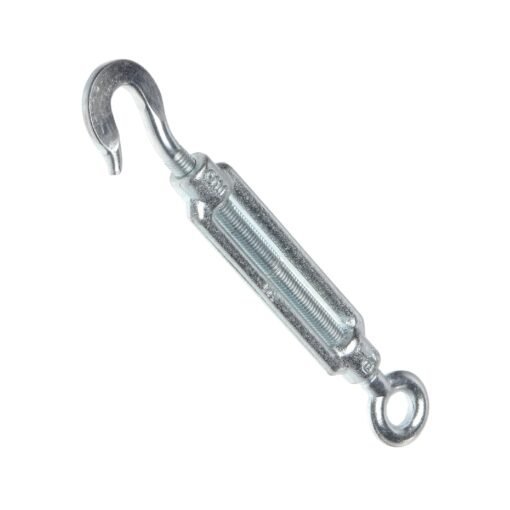
Industrial turnbuckles are heavy-duty mechanical devices used in various industrial applications to adjust tension in cables, wires, ropes, and other load-bearing structures.
These turnbuckles are designed to withstand high loads, harsh environmental conditions, and heavy usage, making them suitable for demanding industrial settings.
They are typically made from durable materials such as stainless steel, carbon steel, or alloy steel and may have specialized coatings to enhance their resistance to corrosion.
END TYPES OF INDUSTRIAL TURNBUCKLES
Insurstial turnbuckles can have different end types or end fittings to suit various applications and connection requirements. The end types typically include the following:
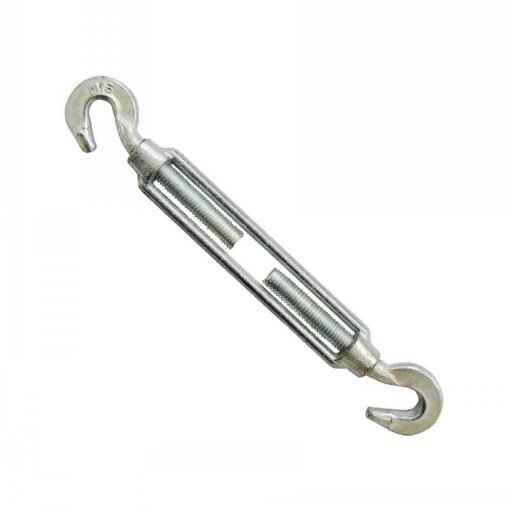
1. Hook Ends: Turnbuckles with hook ends have a hook-shaped fitting on each end. These hooks can be use to attach the turnbuckle to an anchor point or other components in the system.
2. Eye Ends: Turnbuckles with eye ends have an eyelet or loop-shaped fitting on each end. These eye ends allow for easy connection of the turnbuckle to other components using pins, bolts, or other fasteners.
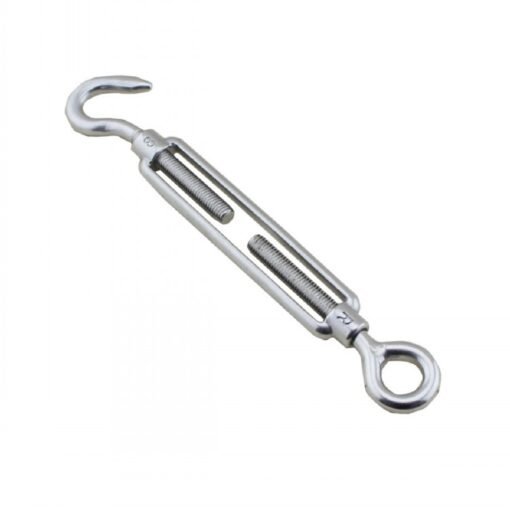
3. Hook and Eye Ends: Some turnbuckles may have a combination of a hook end on one side and an eye end on the other side. This provides flexibility in connecting the turnbuckle to different types of components.
4. Threaded Rod Ends: Turnbuckles with threaded rod ends have a threaded rod on each end. These rods can be directly screw into or connected with other threaded components.
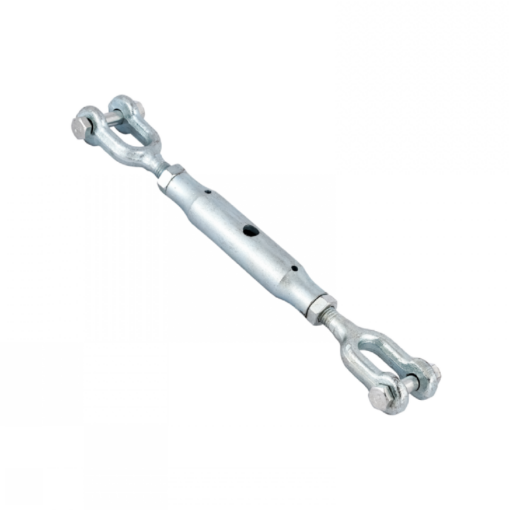
5. Jaw Ends: Turnbuckles with jaw ends have a jaw-shaped fitting on each end. The jaws can be use to secure the turnbuckle to other components or attachments.
6. Jaw and Eye Ends: Turnbuckles with jaw and eye ends have a jaw and eye fitting on each end. The jaw can accommodate pins, bolts, or other fasteners to connect with other components.
Common Uses of Industrial Turnbuckles
1· Tensioning of cables and wires in fences, railings, and suspension bridges.
2· Supporting and adjusting the tension of sails in sailboats.
3· Tightening guy wires for telecommunications or radio towers.
4· Maintaining tension in overhead lines for electricity distribution.
5· Adjusting tension in netting and other types of fabric or mesh.
DIMENSIONS

Reviews
There are no reviews yet.